
Over the past few years, a number of conservative commentators, both Christian and secular, have raised alarms about a group that they have dubbed the “woke right.” Like the woke left, the woke right is fixated on race, repudiates (classical) liberalism, and seeks radical social transformation. In several articles, I’ve made this parallel more precise, arguing that we really can view the woke right as a mirror-image, Bizarro-world doppelgänger of woke left. The two look similar because both have embraced the framework of critical theory. The woke right has merely inverted the woke left’s judgments, e.g. straight White men are at the bottom, not the top, of the American social hierarchy.
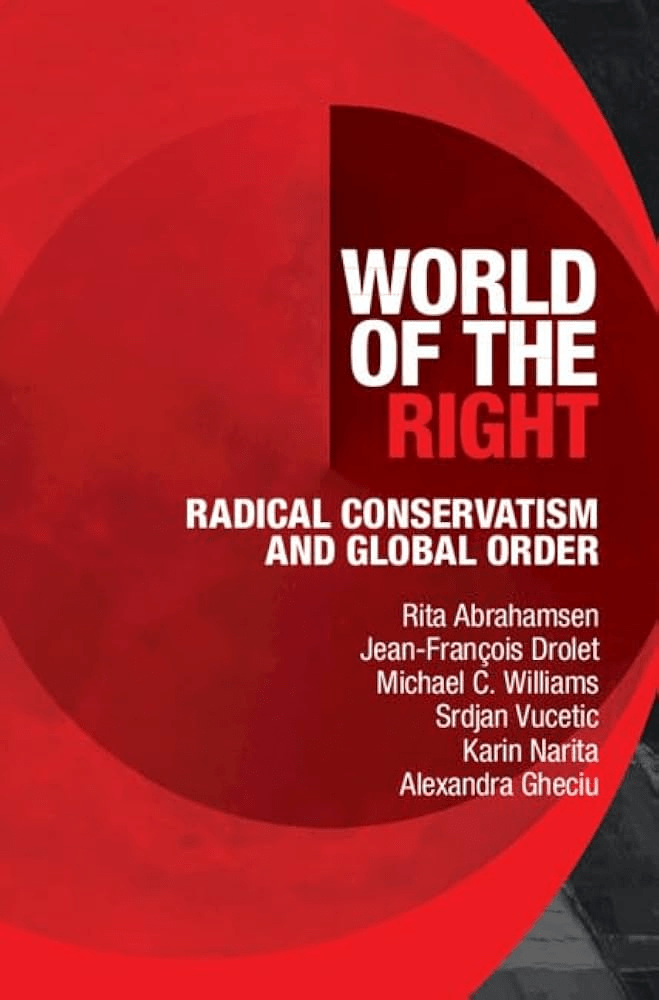
For this reason, it was gratifying to stumble upon Abrahamsen et al’s 2024 book World of the Right: Radical Conservativism and the Global Order. The authors’ thesis, elaborated over five chapters, is that what they call the “New Right” or the “radical Right” is rooted in the theorizing of 20th-century Neomarxist Antonio Gramsci. Gramsci was a key figure in the evolution of critical theory in general and in the development of critical race theory in particular, making him a surprising object of right-wing admiration. Nonetheless, the authors demonstrate that the radical Right has “self-consciously and strategically appropriated” “many of Gramsci’s core ideas, particularly those concerning cultural hegemony, historic blocs, and counter-hegemonic movements” (p. 30).
To understand the authors’ thesis, we must first understanding the Neomarxist thought of Antonio Gramsci.
Understanding Neomarxism
Neomarxism differs from classical Marxism in several important ways, which are admirably summarized in Chapter 2. Gramsci’s central motivation was trying to understand why the communist revolutions predicted in the 19th century by Karl Marx had failed to materialize. Gramsci concluded that the ruling class maintained its power not merely through ownership and coercion, but also through “the consent or cooperation of the dominated — the operation of what he famously called ‘hegemony'” (p. 35-36). Gramsci rejected the classical Marxist idea that a society’s values, ideas, arts, and religion (its “superstructure”) were a mere product of its economic structure (its “base”). Rather, culture is “an essential, active domain that systematically underpins and supports social orders” (p. 36).
In other words, Gramsci believed that certain ideas and narratives suffuse society and are accepted as “common sense” by oppressed people. Oppressed groups thereby give consent to their own subordination and legitimize the ruling class. To expose these hegemonic narratives as mechanisms of oppression, “organic intellectuals” must rise up to create a “counterhegemonic narrative” which gives the masses a new way of seeing reality and a new awareness of their class’ subordinate status. Their Marxian goal is to awaken in oppressed people a “class consciousness” such that they are transformed “into a politically self-conscious and active class [that is] for itself” (p. 38).
While Gramsci, like Marx, was focused on the economic divide between the rich and the poor, later Neomarxists extended Gramsci’s critique to attributes like race, gender, and sexuality. In particular, the earliest critical race theorists borrowed heavily and explicitly from Gramsci to argue that our culture is suffused with “white supremacy” which valorizes the White ruling class and marginalizes people of color.
The Gramscian Right
Chapters 2 and 3 are by far the most important for understanding how the New Right constructed itself along Neomarxist lines. For example, the French Nouvelle Droite (i.e. “New Right”) which was established in the 1960s by Alain de Benoist, Guillaume Faye, Dominique Venner, and others, explicitly aimed to develop –in the words of Venner himself– a “Gramscianism of the Right” (p. 40). Just as the New Left began its “long march through the institutions,” the Nouvelle Droite geared up for its own counter-revolutionary movement, focusing on the “dissemination of cultural values, ideas, and mentalities with the aim of instigating long-term political change by first shifting the boundaries of acceptable discourse within society” (p. 42). For this project, they not only enlisted the work of Gramsci, but also the writing of Frankfurt School critical theorists like “Adorno, Horkheimer, [and] Marcuse” along with Marxist philosopher “[Louis] Althusser, and Marx himself” who all “became part of a ‘counter-encyclopaedic’ pedagogy of the Right” (p. 42).
These claims are not mere speculation; they are based on the explicit statements of members of the New Right, in France and later in the United States and around the world. For example, American paleoconservative Sam Francis wrote in the early 1990s that “if the cultural right in the United States is to take back its culture from those who have usurped it, it will find a study of Gramsci’s ideas rewarding” (p. 46). In that same essay, Francis goes on to say that “While Gramsci and Hitler sought to develop their cultural strategy for totalitarian ends, communist in the case of Gramsci and national socialist in the case of Hitler, the same strategy can be used for conservative purposes, and probably even more successfully in the United States.” He even praises the European New Right for “explicitly invok[ing] Gramsci as a source of its ideas and strategy.” More recently, Hudson Institute Senior Fellow John Fonte wrote in The American Mind that “The authority of the administrative state does not rest on raw power alone; like any political regime, it needs moral and intellectual legitimacy [which is] rooted in a system of principles, value, mores, norms, and cultural habits that together constitute what Antonio Gramsci called ideological hegemony” (p. 78).
Here, it seems hardly incidental that prominent New Right intellectuals like James Burnham or Frank Furedi were former communists. Though it’s unlikely that they deliberately laundered the ideas of Gramsci into the paleoconservative movement, it’s plausible that they had been heavily influenced by Neomarxist thinking and continued to employ it even after they switched sides.
(New) Class Warfare
Just as feminism and CRT reframed Gramsci’s ideas in terms of gender and race respectively, the global New Right repurposed his thought to fit into its own ideological framework. The role of the bourgeois oppressor class is not filled by men or Whites, but by the “global liberal managerial elite” or what the radical Right deems the “New Class of experts and bureaucrats [who are] detached and unmoored from their national identities and cultures [and who] work against the interests of traditional national values and local communities” (p. 31).
However, the struggle of the New Right is not pure populism (e.g. “the people” vs. “the elites”). Rather, their “ultimate aim is to replace the liberal, woke, managerial, globalist elite with a Right elite, schooled in the critique of managerialism and critical of the overreach of liberal power and international institutions” (p. 32, emph. added). Like the woke left, the New Right sees hegemonic narratives, not material conditions, as the ultimate source of social oppression. Therefore, they have launched a strategic “war of position” that challenges leftist hegemony through think tanks, conferences, and transgressive Internet memes. They aim to shift the Overton window rightward so that those marginalized by the current world order come to recognize their own oppression.
Because the New Right’s critique is fundamentally anti-globalist, anti-egalitarian, and anti-liberal, it often dovetails with traditional racist and anti-Semitic movements. For example, Greg Johnson, a “leading figure in the North American New Right” writes that “The primary metapolitical project of the North American New Right is to challenge and replace the hegemony of anti-White ideas” (p. 53). His aim is to “make white racial consciousness and self-assertion hegemonic… so that no matter what political party wins office, white interest will be secured” (p. 54). To their credit, the authors add that “not all those sympathetic to the American New Right subscribe to its racist, white nationalist, or supremacist variants” but admit that “race is… an important element in much radical Right thinking” (p. 540).
Analysis
Thus far, I have offered little if any criticism of the New Right’s promulgation of Neomarxist ideas. For the most part, the same is true of the book’s authors. Although they are upfront about their own progressive political commitments, they generally confine themselves to a scholarly treatment of the New Right’s explicitly stated beliefs, methods, and goals. It is my belief that they have successfully demonstrated their thesis: the New Right has indeed embraced a Gramscian framework for understanding both politics and culture.
That said, this recognition –by itself– shouldn’t lead us to conclude that the New Right’s project is fundamentally corrupt. To do that, we would have to make additional assumptions like “Gramsci’s conception of cultural hegemony is false” or “Gramsci’s analysis is inseparable from his fundamentally Neomarxist perspective on reality.” Some Christians may opt for the latter approach, arguing that it is off-limits for Christians to make use of any element of Gramsci’s ideology as tool for cultural analysis.
However, I personally disagree. For instance, for years I have been pointed out that the ability of Hollywood and Madison Avenue to shape our culture’s understanding of beauty and sexuality is an example of hegemonic power in action. My objections to the New Right’s adoption of cultural hegemony (as well as Gramsci’s other ideas) lie in a different direction. Namely, I argue that the conception of a monolithic “hegemonic narrative” is overly simplistic and fails to account for the multiple, competing narratives at work in our culture. Similarly, both the woke left and the woke right’s understanding of ethnicity is incompatible with a biblical emphasis on Christians’ identity in Christ.
Regardless of our approach, we do need to be consistent. We can hardly reject Neomarxism as wicked and demonic when it is pushed by the Left and then turn a blind eye to it when it is laundered into our political discourse by the Right. “Equal weights and measures” is the biblical standard.
Finally, as much as I appreciated World of the Right, it is not without its faults. Foremost among them is the authors’ inability to sympathize with the New Right’s legitimate concerns. They simply take it for granted that the furor of CRT is a distraction, that globalization is an obvious good, that abortion is a human right, and that concerns over mass immigration are easily dismissed. It is somewhat ironic that scholars steeped in Gramscian Neomarxism don’t ask whether their “common sense” beliefs may simply reflect the unquestioned hegemonic values current among their progressive peers.
Similarly, they do note that New Right politics makes strange bedfellows, uniting White Supremacists, Black Nationalists, and Hindu Nationalists under the banner of cultural sovereignty. But they also conflate disparate actors, naming “Jordan Peterson, Tucker Carlson, Christopher Rufo, Yoram Hazony, and Marion Maréchal” as “luminaries of the global radical right” (p. 134). While these individuals would probably share some views (e.g. a rejection of wokeness) it’s questionable whether a self-identified classical liberal like Peterson or an anti-woke activist like Rufo has enough in common with a conservative pundit like Carlson or an Israeli Nationalist like Hazony to slap the same label on all of them.
Conclusion
World of the Right should permanently put to rest any objection that the term “woke right” is inappropriate, baseless slur. Some people may use “woke” as an empty signifier that does nothing more than express contempt. But I’ve always used “woke” descriptively, not pejoratively, to denote an ideology built on a Neomarxist view of reality. Since the radical Right has embraced this view, the label “woke” seems entirely reasonable. Moreover, it is clear that the conservative movement in general does not embrace this framework, which makes it important to offer some distinguishing label like “Gramscian Right” or “Neomarxist Right.” However, as I’ve always said, we should focus on ideas, not labels, affirming what is true and biblical and rejecting what is false and unbiblical.
Related articles:
 Neil Shenvi - Apologetics